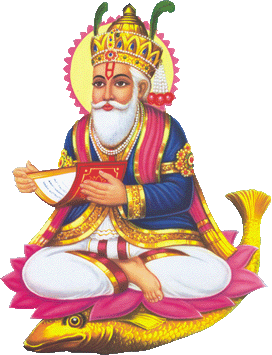
Sindhi Unity Hub started as a simple idea with a big vision: to bring Sindhis from all corners of the world closer together. Our goal is to celebrate and preserve the rich traditions, stories, and heritage that make our culture unique. By sharing experiences, supporting one another, and creating meaningful connections, we aim to strengthen the bonds of the Sindhi community worldwide. Whether you are looking to reconnect with your roots, share your journey, or simply meet fellow Sindhis, Sindhi Unity Hub is your home—a place where our shared culture and community thrive
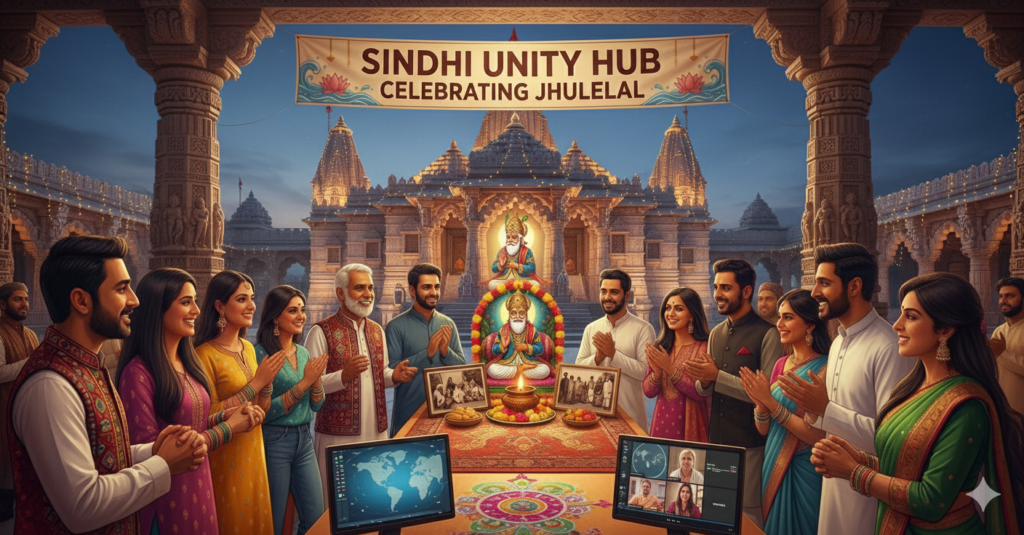
Hindu Sindhi: Origins, Language, Food, and Culture
The Hindu Sindhi community is one of the oldest and most culturally rich groups of South Asia, tracing its roots to the historic region of Sindh, located along the lower Indus River. Known for their entrepreneurship, adaptability, and deep cultural heritage, Hindu Sindhis have preserved a strong identity despite major historical migrations.
1. Origins of Hindu Sindhis
Hindu Sindhis originate from Sindh—home to the ancient Indus Valley Civilization (3300–1300 BCE). Archaeological sites like Mohenjo-Daro highlight the long civilizational history that shaped early Sindhi identity.
Before the Partition of India in 1947, around 25–30% of Sindh’s population was Hindu. After partition, most Hindu Sindhis migrated to India and later spread globally. Today, the Sindhi diaspora thrives in India, the Middle East, Southeast Asia, Europe, and the United States.
2. Sindhi Language
The Sindhi language is an Indo-Aryan language deeply connected to Sanskrit, with additional influences from Persian and Arabic.
It is written in:
- Arabic script in Pakistan
- Devanagari script in India
In 1967, Sindhi was officially recognized in the Eighth Schedule of the Indian Constitution, significantly supporting its preservation.
3. Sindhi Food & Cuisine
Sindhi cuisine is famous for its rich, wholesome flavors and nutritious ingredients.
Popular dishes include:
- Sai Bhaji – a blend of greens, vegetables, and lentils
- Sindhi Kadhi – tangy gram-flour-based curry with vegetables
- Dal Pakwan – crispy flatbread with seasoned lentils
- Koki – thick spiced flatbread
- Kichhadi & Tuk – rice-lentil mix with fried potatoes
During the Thadri festival, traditional no-fire foods such as boondi, koki, and dahi vada are prepared.
4. Sindhi Culture & Traditions
Hindu Sindhi culture combines ancient Indic traditions with Sufi influences, creating a unique and identifiable heritage.
a. Religion & Spirituality
Hindu Sindhis worship mainstream Hindu deities as well as regional spiritual figures, especially Jhulelal, the community’s patron deity symbolizing protection and unity.
b. Festivals
Major festivals:
- Cheti Chand – Sindhi New Year and Jhulelal Jayanti
- Diwali
- Holi
- Navratri
- Thadri – the no-cooking festival
c. Art, Music & Clothing
- Sindhi Ajrak – ancient block-printed textile symbolizing pride
- Sindhi Topi – traditional cap
- Music inspired by Sufi poetry and devotional themes
d. Social Values
Hindu Sindhis are known for:
- strong family bonds
- ethical business practices
- community cooperation
- resilience after displacement
5. Scholarly References
- K. R. Malkani, The Sindh Story, Sindhi Academy, 1987.
- Rita Kothari, The Burden of Refuge: Partition Experiences of Sindhis of Gujarat, Orient Blackswan, 2007.
- Rita Kothari, Sindhi: A Language of Modern India, Penguin India, 2014.
- P. M. Kurta, Sindhi Heritage and Culture, University of Sindh Press, 1998.
- Usha Desai, The Sindhis, National Book Trust, 2002.
- Mark-Anthony Falzon, “The Sindhi Diaspora: A Global Family,” Asian Anthropology, 2004.
- Rita Kothari, “Sindhis: Between the Hindu and the Indian,” Economic & Political Weekly, 2009.
Our Sponsors
If you are interested in supporting the growth and development of the Sindhi community, please reach out to us. Together, we can make a meaningful impact.